SHALLOW WATER CA-EBS COURSE PROGRAMME
Principles of Compressed-Air Emergency Breathing Systems (CA-EBS)
- Principles of other Emergency Breathing Systems commonly used in the oil and gas industry, such as rebreather systems
- Components and features of the CA-EBS
- Operation of compressed-air EBS equipment in conjunction with other survival equipment
- Hazards associated with compressed-air EBS equipment
- Pre-donning checks of the aviation life jacket and compressed-air EBS
- Donning an aviation life jacket fitted with a compressed-air EBS and deploying the CA-EBS
- Donning an aviation life jacket fitted with a Compressed-Air Emergency Breathing System (CA-EBS) and carrying out CA-EBS equipment integrity checks, including buddy checks
- Deploying the CA-EBS with both the left and right hand and breathing from the equipment at atmospheric pressure in dry conditions
- Following aircrew instructions, locating the CA-EBS equipment and evacuating from a helicopter through a designated exit after a controlled emergency descent to a dry landing. This exercise is conducted in a poolside helicopter simulator on dry land
- Actions to be taken in preparation for a ditching, including locating the exit, deploying the CA-EBS and breathing from it at atmospheric pressure in dry conditions. This exercise is conducted in a poolside helicopter simulator on dry land
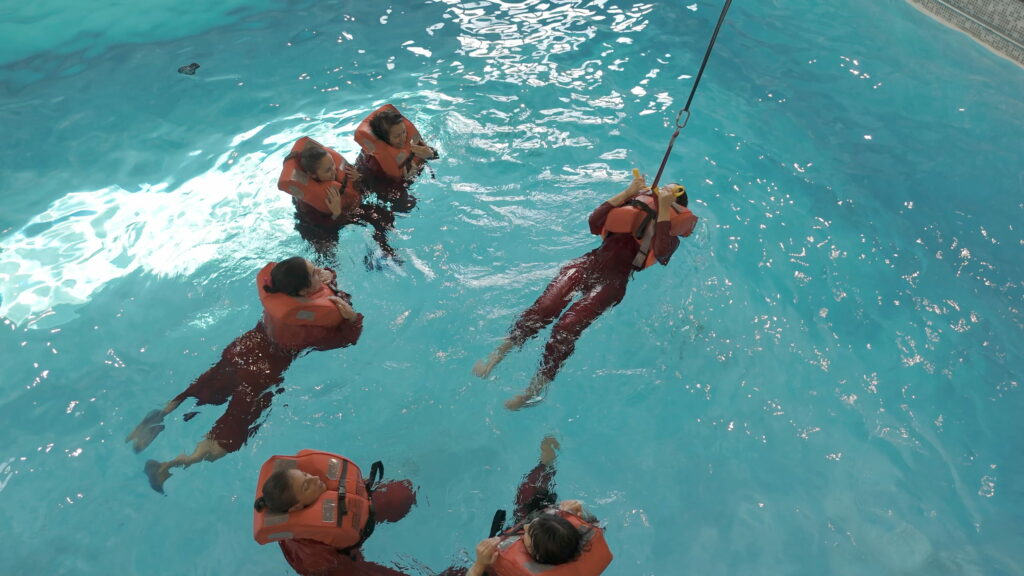
- Deploying the CA-EBS above the water surface and breathing from it while face down in shallow water, at a maximum chest depth of 0.7 metres
- Deploying the CA-EBS below the water surface while face down in shallow water and clearing the mouthpiece by exhaling underwater, at a maximum chest depth of 0.7 metres
- Deploying the CA-EBS below the water surface while face down in shallow water, using the opposite hand from the previous exercise, and clearing the mouthpiece using the purge button underwater, at a maximum chest depth of 0.7 metres
- Deploying the CA-EBS above the water surface and breathing from it underwater in an upright position, at a maximum chest depth of 0.7 metres
- Deploying the CA-EBS underwater and breathing from it underwater in an upright position, at a maximum chest depth of 0.7 metres
- Deploying the CA-EBS underwater, breathing from it and moving along a horizontal handrail for at least 30 seconds, including a change of direction, at a maximum chest depth of 0.7 metres