- Via delle Azalee, 21 Sant’Alessio con Vialone (PV), Italia
- (+39) 0382-538026
- Mon - Fri 8:00 – 17:30
- Customer Reserved Area

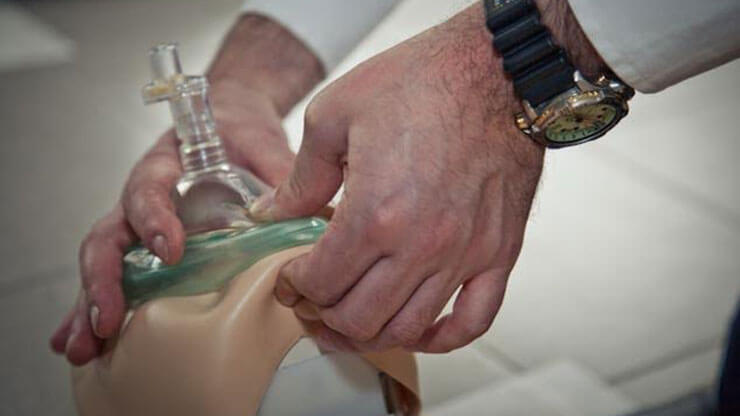
The BLSD (Basic Life Support and Defibrillation) course, offered by Lombardy’s Regional Emergency Medical Services Agency (AREU), teaches participants how to recognise cardiac arrest and treat it by performing high-quality chest compressions. The course also includes a module dedicated to recognising and treating complete airway obstruction and performing paediatric resuscitation.
During the training sessions, participants will learn the most effective methods for following a structured response to cardiac arrest, starting with promptly contacting emergency medical services through the WhereAREU app or a standard telephone call.
Participants will also learn how to manage the period before emergency medical services arrive, with the aim of increasing the survival chances of a person experiencing cardiac arrest, including the use of an AED when necessary. Basic techniques for managing complete airway obstruction will also be introduced and practised.
The BLSD course covers two core areas. The first is basic life support: assessing the scene, calling emergency services, performing chest compressions and relieving airway obstruction. The second is the use of a semi-automated external defibrillator, represented by the “D” in the acronym.
This provides comprehensive training in responding safely to cardiac arrest both at home and in the workplace. The course is intended for healthcare professionals, laypersons and company employees who wish to acquire lifesaving skills.
What does BLSD stand for? The significance of a BLSD (Basic Life Support and Defibrillation) course goes beyond training alone. It is an investment in individual and collective safety. Knowing what to do at a critical moment can truly make the difference between life and death.
From a regulatory perspective, BLSD training is among the measures provided for in workplaces, sports facilities and schools where the presence of a person trained to use an AED is required.
The duration of a BLSD course may vary depending on the training centre and region. In Lombardy, the course lasts approximately five hours, covering theory and, above all, practical training with manikins and practice of the response sequences.
At the end of the BLSD course, participants undergo an assessment. This includes both a theoretical and a practical component, during which participants simulate a complete emergency response using a manikin and a defibrillator.
Passing these assessments is essential to obtain the BLSD Provider Certificate and achieve certification. The assessment confirms that participants have acquired the required skills: recognising cardiac arrest, activating emergency medical services, performing high-quality chest compressions for cardiopulmonary resuscitation and using a defibrillator.
Once participants have passed the assessment and completed the course, they receive a certificate confirming their attendance and competence. The certification is valid for two years.
BLS (Basic Life Support) is a course covering basic first aid techniques to sustain the life of a person experiencing cardiac arrest or another respiratory or circulatory emergency. It focuses on chest compressions and the assessment of vital signs.
BLSD (Basic Life Support and Defibrillation) includes all BLS techniques, with the addition of semi-automated external defibrillator (AED) use. In practice, participants in a BLSD course also learn to recognise cardiac arrest and use a defibrillator safely, significantly increasing the casualty’s chances of survival.
The BLSD course is intended for everyone, including those without a healthcare background, and teaches basic resuscitation techniques and defibrillator use.
The ACLS (Advanced Cardiovascular Life Support) course, on the other hand, is primarily intended for qualified healthcare professionals. It explores the advanced management of cardiac arrest, arrhythmias and cardiovascular emergencies, including medication use, ECG interpretation and resuscitation team management.
Both courses are important for saving lives, with the distinction that BLSD trains basic life support providers, while ACLS prepares professionals to deliver advanced resuscitation.
Theoretical training and practical scenarios:
/
BLSD 118 Lay Rescuer Certificate pursuant to Law No. 120 of 3 April 2001; Regional Government Resolution No. 10306 of 16 September 2002; Ministerial Decree of 18 March 2011; Regional Government Resolution No. 2869 of 29 December 2011; and Regional Government Resolution No. 4717 of 23 January 2013.
Accredited BLSD Instructors – AREU
Fill out the form below to inquire about the course. We will be in touch soon
The BLSD (Basic Life Support and Defibrillation) course, offered by Lombardy’s Regional Emergency Medical Services Agency (AREU), teaches participants how to recognise cardiac arrest and treat it by performing high-quality chest compressions. The course also includes a module dedicated to recognising and treating complete airway obstruction and performing paediatric resuscitation.
During the training sessions, participants will learn the most effective methods for following a structured response to cardiac arrest, starting with promptly contacting emergency medical services through the WhereAREU app or a standard telephone call.
Participants will also learn how to manage the period before emergency medical services arrive, with the aim of increasing the survival chances of a person experiencing cardiac arrest, including the use of an AED when necessary. Basic techniques for managing complete airway obstruction will also be introduced and practised.
The BLSD course covers two core areas. The first is basic life support: assessing the scene, calling emergency services, performing chest compressions and relieving airway obstruction. The second is the use of a semi-automated external defibrillator, represented by the “D” in the acronym.
This provides comprehensive training in responding safely to cardiac arrest both at home and in the workplace. The course is intended for healthcare professionals, laypersons and company employees who wish to acquire lifesaving skills.
What does BLSD stand for? The significance of a BLSD (Basic Life Support and Defibrillation) course goes beyond training alone. It is an investment in individual and collective safety. Knowing what to do at a critical moment can truly make the difference between life and death.
From a regulatory perspective, BLSD training is among the measures provided for in workplaces, sports facilities and schools where the presence of a person trained to use an AED is required.
The duration of a BLSD course may vary depending on the training centre and region. In Lombardy, the course lasts approximately five hours, covering theory and, above all, practical training with manikins and practice of the response sequences.
At the end of the BLSD course, participants undergo an assessment. This includes both a theoretical and a practical component, during which participants simulate a complete emergency response using a manikin and a defibrillator.
Passing these assessments is essential to obtain the BLSD Provider Certificate and achieve certification. The assessment confirms that participants have acquired the required skills: recognising cardiac arrest, activating emergency medical services, performing high-quality chest compressions for cardiopulmonary resuscitation and using a defibrillator.
Once participants have passed the assessment and completed the course, they receive a certificate confirming their attendance and competence. The certification is valid for two years.
BLS (Basic Life Support) is a course covering basic first aid techniques to sustain the life of a person experiencing cardiac arrest or another respiratory or circulatory emergency. It focuses on chest compressions and the assessment of vital signs.
BLSD (Basic Life Support and Defibrillation) includes all BLS techniques, with the addition of semi-automated external defibrillator (AED) use. In practice, participants in a BLSD course also learn to recognise cardiac arrest and use a defibrillator safely, significantly increasing the casualty’s chances of survival.
The BLSD course is intended for everyone, including those without a healthcare background, and teaches basic resuscitation techniques and defibrillator use.
The ACLS (Advanced Cardiovascular Life Support) course, on the other hand, is primarily intended for qualified healthcare professionals. It explores the advanced management of cardiac arrest, arrhythmias and cardiovascular emergencies, including medication use, ECG interpretation and resuscitation team management.
Both courses are important for saving lives, with the distinction that BLSD trains basic life support providers, while ACLS prepares professionals to deliver advanced resuscitation.
Theoretical training and practical scenarios:
/
BLSD 118 Lay Rescuer Certificate pursuant to Law No. 120 of 3 April 2001; Regional Government Resolution No. 10306 of 16 September 2002; Ministerial Decree of 18 March 2011; Regional Government Resolution No. 2869 of 29 December 2011; and Regional Government Resolution No. 4717 of 23 January 2013.
Accredited BLSD Instructors – AREU