BOSIET – EBS COURSE PROGRAMME
SAFETY INDUCTION
Theoretical Training
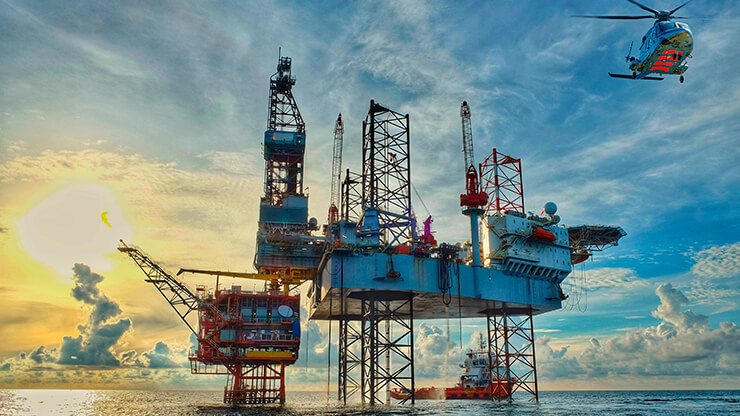
Overview of Offshore Operations and Installations
- Offshore oil and gas extraction activities
- Formation, exploration and development of oil and gas reservoirs, including how hydrocarbons are formed, located and produced
- Types of offshore installations and specialist vessels, including their main functions and characteristics:
- Drilling installations: jack-up rigs, semi-submersible rigs and drillships
- Production installations: oil and gas or gas-only facilities, both fixed and floating
- Construction vessels: heavy-lift vessels and pipe-laying vessels
- Accommodation modules
- Specialist vessels: standby vessels, support vessels and diving support vessels
- The offshore environment, including isolation, extreme conditions and the proximity of process areas, work areas and living accommodation
Offshore Hazards
- Definitions of hazard, risk and control measures
- Accident statistics and comparison with other industries
- Environmental impact statistics
- Offshore hazards and associated risk levels, including:
- Pressure
- Lifting and material handling
- Chemicals
- Electricity
- Gravity
- Noise
- Hazardous atmospheres
- Confined spaces
Offshore Safety Management
- The multiple-barrier model and the systems used to prevent and control hazards, including:
- Safe Systems of Work
- Personal responsibility for safety
- Behavioural and safety observation programmes
Hazard Control
- The hierarchy of controls and how control measures are implemented
- Risk assessment and implementation of control measures, including:
- Isolation of pipelines and reservoirs
- Blowout prevention systems
- Pipe-handling and lifting training
- Machinery guarding
- Safety Data Sheets and protection from chemicals and dust
- Electrical isolation
- Fall protection
- The consequences of failing to control hazards effectively
Offshore Safety Legislation
- How offshore safety is regulated, including:
- Applicable legislation
- Statutory requirements
- Legal responsibilities
- The role of organisations within the oil and gas industry
- Safety Management System documentation
- The hierarchy of legislation
- Relevant directives
- The Health and Safety Document, including:
- Identification of major hazards, risks and control measures
- How safety is managed
- Approval by the relevant health and safety regulatory authority
- Verification of safety-critical systems
- Required performance standards
- Duties of employers and employees and the concept of ALARP
- How prevention, protection and emergency response objectives are established
- How emergency response plans are developed and the required standards are defined
- The role of health and safety authorities, including their purpose, activities and inspection powers
- Use of ISO standards, including ISO 14001
- Industry expectations regarding personal safety behaviour, including:
- Expected safety standards
- Common behavioural safety tools and programmes
Living and Working Offshore
- Health requirements and medical fitness standards
- Procedures for taking prescribed medication
- Substance misuse policies
- Offshore routines and welfare arrangements, including:
- Administrative procedures and requirements upon arrival at an offshore installation
- Permitted and prohibited items
- Installation-specific hazard briefings
- Safety representative elections
- The role of the Safety Representative and Safety Committee
- Employee responsibilities
- Workforce communication channels
- Cabins, laundry facilities, shops and recreation areas
- Smoking arrangements
- Working and living respectfully with others
- Working routines, including:
- Procedures
- Permit-to-work systems
- Personal protective equipment
- Maintaining a safe workplace
- Waste management
- The right to stop unsafe work
- Participation in safety activities, including:
- Safety observation systems
- Permits to work
- Toolbox talks
- Safety meetings
- Emergency drills
- Additional emergency duties
- Active workforce involvement
- Safety communication and reporting channels
- Actions to take when dissatisfied with the response to a safety concern, including contacting:
- The immediate supervisor
- The Offshore Installation Manager
- Safety Representatives
- The Health and Safety Regulator
- Accidents and occupational illness, including:
- Reporting accidents, near misses and illnesses
- The role of the offshore medic
- Offshore first aid arrangements
- Accident investigation
- Preventing recurrence
- Supporting relatives in the event of illness, accidents, major incidents or evacuation
HELICOPTER SAFETY AND ESCAPE
Theoretical Training
Helicopter Travel
- Pre-flight briefing
- Pre-boarding procedures, including:
- Arrival at the heliport
- Required documentation
- Suitable clothing
- Prohibited items
- Check-in procedures
- Helicopter transit suits
- Aviation life jackets
- Safe boarding procedures
- Use of seat belts and harnesses
- Pre-flight safety video
- Procedures to follow during the flight
- Safe disembarkation
Helicopter Emergencies
- Actions to take during an in-flight emergency
- Brace positions
- Impact-attenuating seating systems
- Procedures in the event of an emergency landing or ditching
- Helicopter safety features, including:
- Flotation systems
- Escape routes
- Emergency exits
- Life rafts
- Independent actions to be taken during an emergency
- Survival actions following evacuation after:
- Ditching
- Entry into a life raft
- Entry into the water
- An emergency landing
- Emergency Breathing System, or EBS:
- Available versions
- Pre-use checks
- Operating principles
- Duration
- Associated buoyancy characteristics
- Personal locator beacons
Practical Training
- Donning a helicopter transit suit, aviation life jacket and Emergency Breathing System, and carrying out EBS integrity checks
- Deploying, operating and breathing from an EBS in dry conditions
- Actions to be taken in preparation for an emergency landing or ditching
- Actions following a controlled emergency landing, including evacuation through a designated exit
- Deploying, operating and breathing from an EBS in a swimming pool using the participant’s own exhaled air before completing HUET exercises
- Breathing from the EBS in both positive and negative body orientations created by body movement and positioning in the water
- Actions following a controlled ditching, including:
- Deployment of the EBS
- Removal of a push-out window following instructions from the aircrew
- Evacuation through a designated exit onto an aviation life raft
- Assisting, where practicable, with the initial actions required after boarding an aviation life raft, including:
- Securing painter lines
- Deploying the sea anchor
- Erecting the canopy
- Maintaining the raft
- Underwater evacuation through a window following partial helicopter submersion:
- Without deploying the EBS and without removing the window
- With deployment, operation and use of the EBS, without removing the window
- With deployment, operation and use of the EBS, including window removal
- Underwater evacuation through a window following helicopter capsize:
- Without deploying the EBS and without removing the window
- With the EBS deployed and operated at the surface before capsize, without removing the window
- With the EBS deployed and operated at the surface before capsize, including window removal
- Inflating an aviation life jacket and deploying the spray visor in the water
- Boarding an aviation life raft from the water
SEA SURVIVAL AND FIRST AID
Theoretical Training
- Typical emergencies on offshore installations
- Station bills and emergency duties
- Different means of escape
- Actions to be taken before, during and after a controlled evacuation or abandonment of an installation
- Essential installation knowledge required by all personnel, including:
- Typical installation layout
- Escape routes
- Temporary refuges
- Muster points
- Abandonment stations
- Access routes, including the helideck
- Helideck landing areas
- Alternative escape routes
- Installation alarms and communication systems, including:
- Their location
- Their use
- The correct response
- Delegation of command within the organisational structure
- Appropriate emergency procedures and required actions
- The need for and use of personal protective and emergency equipment, including:
- Gloves
- Torches
- Smoke hoods
- Survival and abandonment suits
- Life jackets
- Search and Rescue organisation
- Sea rescue resources and rescue craft
- Actions to take during rescue operations
- Helicopter winch recovery, including:
- Duties of the winch operator
- Use of the guide line
- Individual and two-person recovery
- The importance of wearing suitable clothing
- Offshore recovery methods, including:
- Standby vessels
- Fast Rescue Craft
- Mechanical Rescue and Recovery Devices
- Rescue nets
- Rescue baskets
- Pilot ladders
- Types of Totally Enclosed Motor Propelled Survival Craft, or TEMPSC, including:
- Free-fall systems
- Single-fall systems
- Twin-fall systems
- Functions and characteristics of survival craft
- Muster, boarding and seat-belt procedures, including:
- Safety precautions during lowering and release
- Emergency equipment
- Survival provisions
- Tertiary means of escape, including:
- Knotted ropes
- Scramble nets
- Davit-launched life rafts
- Pilot ladders
- Descent devices
- First aid management
- Types of injury, including:
- Bleeding
- Burns
- Chemical exposure
- Heat exposure
- Cold exposure
- Immediate actions and prioritisation
- Immediate first aid actions before the arrival of the medic or trained first aider, including:
- Assessing the situation
- Making the area safe
- Assessing all casualties
- Prioritising unconscious casualties
- Calling for assistance as quickly as possible
Practical Training
- Carrying out muster procedures, boarding a TEMPSC and fastening the seat belt before the craft is lowered and released
- Entering the water and applying the correct safety precautions when entering from height
- Donning a helicopter lifting strop, being winched and completing a simulated entry into a rescue helicopter, including:
- Individual lifting
- Correct body position
- Entry into the aircraft
- Water survival procedures, including:
- Individual survival techniques
- Swimming
- The HELP position
- Airway protection
- Group survival techniques
- Towing
- Human chains
- Huddle and circle formations
- Rescue using a recognised offshore recovery method
- Boarding a marine life raft and carrying out initial actions, including:
- Securing painter lines
- Deploying the sea anchor
- Maintaining the raft
- Carrying out secondary actions, including:
- Assigning a lookout
- Activating the radio beacon
- Using the first aid kit
- Initial first aid response, including:
- Raising the alarm
- Assessing the situation
- Checking the safety of the area
- Checking the airway, breathing and circulation
- Cardiopulmonary Resuscitation
- Recovery position, demonstration only
FIREFIGHTING AND SELF-RESCUE
Theoretical Training
- General overview of offshore fire safety
- Common causes and types of fire on offshore oil and gas installations, particularly:
- Electrical fires
- Domestic fires
- Welding-related fires
- The fire triangle
- How fire spreads through:
- Conduction
- Convection
- Radiation
- Fire extinguishing media, including:
- Water
- Dry powder
- Foam
- Carbon dioxide
- Purpose of fixed fire and gas detection systems and fixed fire suppression systems
- Actions and precautions required in areas where these systems are activated, particularly where their operation may affect personnel health and safety, including:
- Deluge systems
- Halon and halon replacement systems
- Carbon dioxide systems
- The urgent need to evacuate an area when extinguishing agents have been released
- Actions to take upon discovering a fire in accordance with installation emergency procedures, including:
- Raising the alarm
- Recognising typical locations of portable firefighting equipment
- Evacuating to the designated area
Practical Training
- Actions to take upon discovering a fire
- Raising the alarm
- Selecting suitable portable firefighting equipment
- Operating the alarm system upon discovery of a fire
- Using different types of fire extinguisher on Class A and Class B fires, including:
- Water extinguishers
- Foam extinguishers
- Carbon dioxide extinguishers
- Dry powder extinguishers
- Demonstration of the use of a fire hose reel and fire blanket on Class A and Class B fires
- Selecting, donning and using a smoke hood
- Self-rescue techniques using a smoke hood
- Evacuation from areas affected by smoke and heat in:
- Reduced visibility
- Zero-visibility conditions