HOIT Training Programme
Theoretical Training
Offshore Helideck Regulations and Guidance
Regulations and Guidance
- Relevant guidance for the management of offshore helideck operations
- Guidance on documentation relating to offshore helicopter landing areas
- ICAO standards and recommended practices applicable to offshore helidecks
- ICAO and IATA regulations relating to dangerous goods
- Offshore emergency response requirements
- OPITO Helicopter Landing Officer Handbook
- Helicopter Refuelling Handbook
Helicopter and Helideck Hazards and Management Systems
Offshore Helicopter Landing Areas
- Physical characteristics of the helideck, including the D-value and access to escape routes
- Helideck visual aids, markings and lighting, including fully operational helideck landing lights and an operational emergency backup power supply
- Obstacle-free surfaces, including:
- 210° obstacle-free sector
- 150° limited-obstacle sector
- Obstacle-free area below helideck level, with a 5:1 falling gradient
- Maximum height restrictions across the helideck
- Helideck landing nets and perimeter safety nets: purpose and requirements
- Helicopter landing and manoeuvring areas on vessels
Helideck Equipment and Systems
The instructor will explain:
- Helideck systems, including:
- Visual aids, markings and lighting systems
- Status lights
- Helideck location and movement characteristics on floating installations
- Helideck certification limitations, including the Helideck Limitations List (HLL)
- Standard helideck layout, equipment and intended use, including:
-
- Layout and equipment required for routine operations
- Firefighting equipment and guidance on when and where each item should be used
- Required primary firefighting media, including foam type, delivery and testing
- Required complementary firefighting equipment
- Deck Integrated Fire Fighting System (DIFFS): overview
- Tie-down points
- Meteorological systems and the minimum weather-monitoring equipment required for the relevant operating region
- Routine inspection of helideck systems
- Reporting helideck or system defects to the appropriate authority, such as the Offshore Installation Manager (OIM)
Helicopter and Helideck Hazards
- Human factors that may affect the safety of helicopter operations, including factors associated with the task or role, the individual and the organisation
- Helicopter danger areas
- Rotor movement and the risk of helideck personnel coming into contact with the main or tail rotor
- Effects of adverse weather on helicopter operations, including excessive wind turbulence
- Effects of poor visibility on helideck operations
- Effects of thermal processes, such as turbine exhaust and normal or emergency venting
- Engine or cabin fires
- Electrical hazards
- Hazards associated with the stability of mobile installations during helicopter landing and take-off
- Transfer of dangerous goods to and from the helicopter by the helideck team
- Refuelling operations, including fuel spills and defective equipment
- Loose objects, including baggage, freight and nets, being drawn into the rotor area or engine air intake
- Flying debris, such as rotor fragments following an accident, which may strike personnel
- Crane operations: crane activities must cease during helicopter operations
- Obstacles on the helideck
- Noise hazards and required hearing protection
Helicopter Refuelling Awareness
- Relevant regulations and guidance publications applicable to the operating region
- Aviation fuel types and additives
- Variations in helicopter refuelling connection types
- Typical fuel storage and delivery systems
- Inspection and maintenance of refuelling equipment
- Bonding and grounding requirements
- Fuel filtration and water separation
- Fuel sampling and testing, including daily and weekly checks
- Fuel records
HLO Responsibilities During Helicopter Landing and Take-Off
Key Role and Responsibilities of the HLO
- The role of the Offshore Helicopter Landing Officer
- The HLO’s key responsibilities
HLO Checks, Procedures and Communications During Helicopter Operations
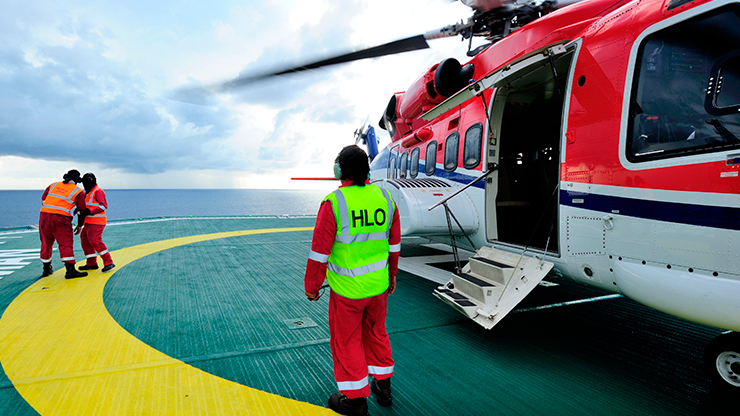
- How the HLO is identified by the helicopter crew
- Standard procedures before landing, while the helicopter is on the helideck and during take-off, according to the operating region, including:
- 30 minutes before the helicopter’s estimated time of arrival
- 10 minutes before the estimated time of arrival
- Immediately before landing
- After landing, with the rotors turning
- After landing, with the engine shut down and rotors stopped
- Securing the helicopter, engine shutdown and installation of protective covers under the direction of the helicopter crew
- Helicopter start-up
- Standard pre-flight meteorological report formats and weather-report validity periods
- Operational limitations caused by adverse weather conditions
- Information on floating installations and vessels required by the pilot, including installation inclination, type of movement and heading
Practical Training
Effective Communications
- Communication with all relevant personnel, including operations personnel, the pilot, crane operator, standby vessels, firefighting teams, HDAs, baggage and cargo handlers and passengers
- Radio communication between the HLO and flight crew restricted to essential exchanges
- Use of standard radio protocols, including receive-only HDA radio sets; HDAs should transmit only in an emergency
- Ensuring that the established procedure for communicating “clear for take-off” to the pilot is understood and correctly applied on the fixed or mobile installation from which the HLO is operating
- Correct application of HLO-to-pilot communication protocols, including “helideck clear” and “do not land” calls
- Communication handover procedures involving installation radio operators
- Limiting radio communications and correctly using hand signals
Operational Checks and Monitoring
- Identification of helicopter type
- Monitoring environmental conditions and any changes
- Checking the radio communication system, including radio checks between the HLO and the radio operator and/or Helicopter Administrator
- Checking the availability and condition of helideck equipment
- Ensuring that the helideck surface is free from contamination, debris or damage following take-off
Supervising the HDA
- Ensuring that HDA duties and responsibilities during helicopter landing and take-off are understood
- Briefing HDAs before helideck operations begin, including conducting a toolbox talk
- Ensuring that HDAs are correctly positioned on the helideck during helicopter landing and take-off and while preparing for emergency response
- Ensuring that the HLO and HDAs are wearing appropriate personal protective equipment
- Applying helideck protocols, including safe approach procedures, confirmation that anti-collision lights are switched off and receipt of a thumbs-up signal from the pilot, in accordance with company procedures
Supervising Passenger and Cargo Handling
Supervising Cargo Handling
- Helicopter loading limitations and requirements and how these may vary according to helicopter type
- Underslung loads, associated hazards and relevant procedures
- Checking inbound and outbound load documentation
- Preparing and supervising the correct loading and unloading of cargo and baggage
- Supervising the use of correct manual-handling techniques during cargo loading and unloading
- Supervising the collection of passenger baggage from the helideck or designated collection point
- Identification of dangerous goods
- Management of dangerous goods, including preparation and correct manual handling in accordance with IATA and ICAO regulations
- Notification to Captain (NOTOC) requirements for dangerous goods
Supervising Passenger Handling
- Checking and interpreting route-plan information and passenger load documentation
- Receiving the inbound load manifest from the pilot and handing the outbound load manifest to the pilot
- Supervising passengers entering and leaving the helideck safely
- Supervising passengers boarding the helicopter
- Supervising passengers disembarking from the helicopter
- Conducting passenger checks, including confirming that passengers are wearing helicopter transit suits and life jackets as required by the operating region, that hearing protection is worn and that seat belts are fastened
Theoretical Training
HLO Operations on Normally Unattended Installations
HLO Responsibilities on a Normally Unattended Installation
- Types of normally unattended installation
- Hazards specific to normally unattended installations, including bird-guano contamination
- The HLO must be the first person to disembark from the helicopter
- On arrival, the HLO must inspect the condition of the normally unattended installation and decide whether the remaining passengers may disembark
- Before departure, the HLO must ensure that all passengers are on board the helicopter before take-off
- The importance of understanding and following the individual company procedures applicable to each normally unattended installation